
When you come to Japan for a motorcycle tour, you will almost certainly use the expressway system at some point.
To help you avoid unexpected trouble, fines, or problems with the police, I’d like to share some important points based on over 25 years of motorcycle touring experience in Japan.
This is the second half of the guide, following Points 1 and 2.
In this article:
3. Lane filtering in traffic jams
4. How to avoid undercover police cars
3. Is Lane Filtering Allowed in Traffic Jams?
During morning and evening rush hours, as well as on weekends and holidays, traffic jams can occur on Japanese expressways.
Long holiday periods often create especially heavy congestion.
Of course, when touring in Japan, you want to avoid accidents at all costs.
In general, it’s true that lane filtering on expressways is not recommended, and it may also attract police attention.
Lane filtering can potentially result in police warnings or fines.
However, in summer or inside tunnels, moving very slowly in heavy traffic can be dangerous due to heat exhaustion or dehydration.
Based on my personal experience, if you get stuck in a traffic jam on a motorcycle, it can sometimes be safer to carefully filter through traffic, as long as you do so responsibly.
After more than 25 years of touring in Japan, here are some key points to keep in mind when filtering in traffic jams:
- Do not ride on the road shoulder
- Only filter when cars are fully stopped or moving very slowly
- Ride at a steady, low speed without weaving between lanes
- Keep your speed low enough to react if a car suddenly changes lanes
- Avoid risky filtering, especially near large vehicles like trucks and buses
- Be extra careful near interchanges, and around service area and parking area entrances and exits, where cars change lanes frequently
- Use extreme caution at night, in the evening, and in rainy conditions
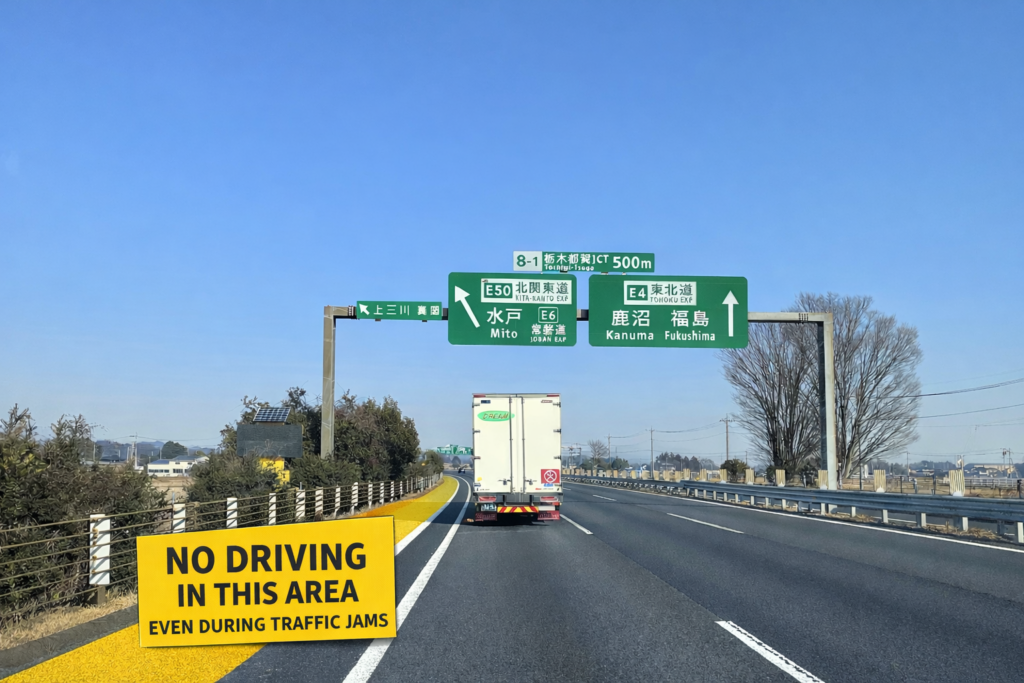
Around major Japanese holidays, traffic jams can stretch up to 40 km, and I followed these same rules during such situations.
Fortunately, I was never involved in an accident or stopped by the police — but please treat lane filtering as an emergency measure only, not a normal riding style.
4. How to Avoid Undercover Police Cars
On Japanese expressways, the police sometimes use unmarked patrol cars that look just like normal vehicles.
These cars are mainly used to enforce speed limits.
If you ride within the legal speed limit, you won’t have any problems — but be careful, because speed limits on Japanese expressways vary by location, usually 80 km/h or 100 km/h.
Most undercover police stops are for speeding violations, and many of these patrol cars operate on expressways with an 80 km/h speed limit.
In particular, urban expressways and curvy routes such as the Chuo Expressway and the Chugoku Expressway often have 80 km/h limits, so be careful not to ride too fast on these roads.
A Helpful Tip: What Do Japanese Undercover Police Cars Look Like?
Most undercover police cars in Japan are Toyota Crown sedans, usually in white or silver.
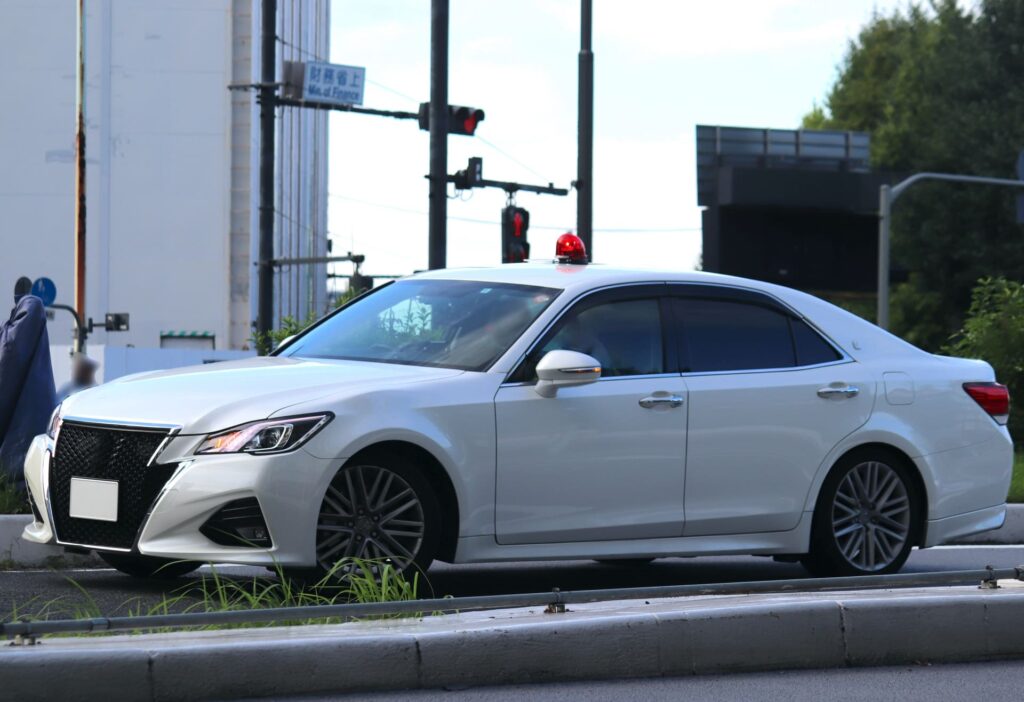
If you see a white or silver Toyota Crown driving steadily at exactly the speed limit, it’s a good idea to keep your distance and match its speed.
If you haven’t read Part 1 yet, you can find it here →
When you come to Japan for a motorcycle tour, you will almost certainl...