
Off-Road Motorcycle Adventures in Japan
Here are some important points to keep in mind when riding the Tsurugi Super Forest Road.
If you’re planning your first off-road adventure in Japan, please use these tips to help you enjoy the route safely and comfortably.
1. Have off-road riding experience and use a suitable motorcycle
The Tsurugi Super Forest Road is not recommended for riders with zero off-road experience.
Most of the route is unpaved, narrow, and can be slippery, so it’s best to ride a lightweight dual-sport or off-road bike.
While it’s technically possible to ride with an on-road motorcycle, it is not safe and you won’t be able to relax or fully enjoy the route.
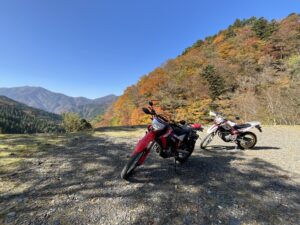
2. Avoid riding alone — go with a partner or group
Traffic on the Tsurugi Super Forest Road is extremely limited, and cars are rare.
In case of a fall, flat tire, or mechanical trouble, it’s much safer to ride with at least one companion or a small group.
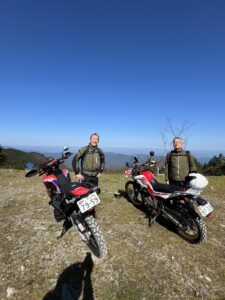
3. Plan a relaxed schedule — ideally a full day
Although the route is approximately 87 km, almost all of it is unpaved, narrow, and winding with poor visibility.
Because of this, it takes much longer to ride compared to paved roads.
There are many scenic viewpoints along the way, so don’t rush — plan breaks to enjoy the landscape.
Off-road riding is also more physically demanding than people expect, so take frequent rest stops to avoid fatigue-related accidents.
If you are not used to off-road riding, consider exiting to a national road midway instead of attempting the entire route in one go.
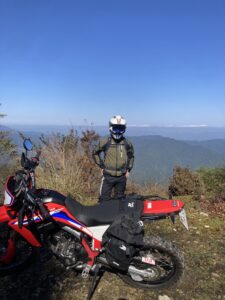
4. Wear off-road appropriate gear and clothing
Since nearly the entire route is unpaved, you’ll encounter muddy areas and puddles even on sunny days.
Wear gear that you don’t mind getting dirty.
Nylon or textile jackets and pants are better than leather for mobility.
Use off-road gloves that allow flexible hand movement.
Temperatures can drop quickly at higher elevations, so bring an extra layer or windproof jacket.
To protect yourself from rocks and loose stones, wear boots that cover your shins.
Knee and elbow protectors are highly recommended to minimize injury in case of a fall.
5. Bring snacks and plenty of water
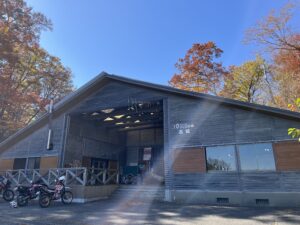
There are two rest houses along the route, but they are not always open.
If you get hungry while riding, your concentration drops and the risk of falling increases.
Bring snacks such as:
- bread
- rice balls
- trail mix or energy bars
Off-road riding consumes more energy and hydration than riders expect.
Even in cooler months, bring at least 1 liter of water.
6. Fill your tank — ensure you can ride at least 200 km
There are no gas stations anywhere along the Tsurugi Super Forest Road.
Many nearby gas stations also close on Sundays or early in the evening.
You may finish the route and still need to ride quite far before reaching the next open station.
Make sure your bike has enough fuel to ride at least 200 km before entering the forest road.
Summary
With the right preparation, gear, and schedule, the Tsurugi Super Forest Road is one of Japan’s most breathtaking and rewarding off-road motorcycle experiences. These safety points are crucial for enjoying the route safely — and they apply not only to the Tsurugi Super Forest Road, but to any forest road or off-road trail you may ride in Japan.
If you have any questions about riding forest roads or planning an off-road motorcycle trip in Japan, Mototourist is here to support you. Whether you need advice on routes, equipment, seasonal conditions, or touring logistics, we’re always happy to help you enjoy a safe and unforgettable adventure in Japan.